

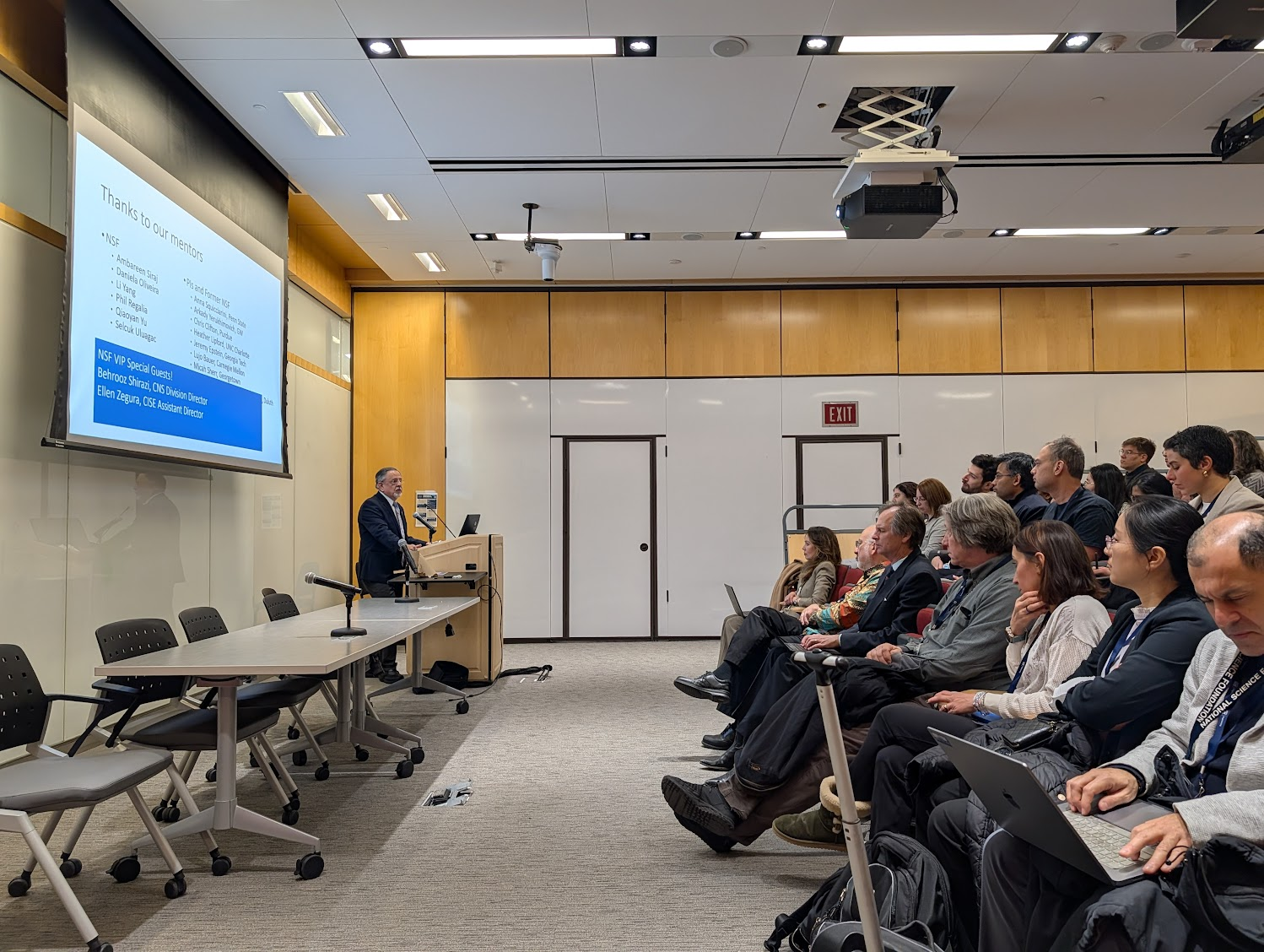
Developing a secure, resilient, and trustworthy global cyber ecosystem is the goal of every researcher seeking funding from the National Science Foundation’s (NSF) Security, Privacy, and Trust in Cyberspace (SaTC 2.0) program. At the 2025 SaTC Aspiring PI Workshop, over 65 early-career faculty traveled to GW Engineering from as far away as Hawaii and as close as Georgetown to learn tips and tricks for becoming among the program’s awardees.
This 1.5-day workshop was coordinated by Associate Professor of Computer Science Adam Aviv, a prominent researcher in computer security and privacy, and co-organizers Michelle Mazurek and Dana Dachman-Soled from the University of Maryland, College Park. The organizers and mentors provided attendees with a valuable platform to understand how to align their work with SaTC 2.0’s goals, thereby increasing the quality of award submissions to NSF and, hopefully, helping aspiring principal investigators (PIs) become funded PIs.
Covering topics from common application mistakes to the NSF merit review process and strategies for structuring proposals, each workshop session offered these early-career faculty critical insights into how to increase their chances of receiving funding for the first time. A unique feature of the workshop was the mock NSF-style review panels, which allowed participants to submit short-form proposal drafts before the event and get feedback in real time.
2025 marked the third iteration of the workshop since Aviv helped revamp the event and first hosted it at GW in 2023. Six current NSF program officers, four former officers, and several senior faculty members from across the country participated as mentors in the December event, giving attendees an opportunity to learn from their experiences in awarding and securing funding.
Highlighting the national significance of the workshop, two high-ranking NSF officers were in attendance: Behrooz Shirazi, Director of the Computing and Networked Systems Division, and Ellen Zegura, Acting Assistant Director of the Directorate for Computer and Information Science and Engineering.
“Bringing those two high-ranking individuals to GW for this event helps highlight both GW’s prominence in computing as well as how we leverage our proximity to funding agencies, like NSF, in D.C.,” said Aviv. “It is a high-profile event that brings a lot of recognition to GW Engineering as a research center and a unique venue for such convening.”