


AI Academy
GW Engineering AI Academy
Faculty Leading the Change Through AI Fluency and the Entrepreneurial Mindset
What is the AI Academy?
The GW Engineering AI Academy is a strategic effort to position the School of Engineering and Applied Science as a truly AI-forward organization. Through systematic faculty development and by applying the lens of an entrepreneurial mindset, we're building AI literacy across our school—moving from uncertainty to confidence, from tools to workflows, and from passive adoption to intentional innovation.
The entrepreneurial mindset aids in challenging the status quo, recognizing opportunities at the intersection of disparate concepts, and solving complex problems to drive meaningful societal impact and human flourishing.
Our vision: To make AI literacy the foundation for turning the disruption of higher education by AI into an opportunity.
A different way of thinking
The entrepreneurial mindset changes how we think about the world and act upon what we see.
“AI products available to us all today can greatly lower the barriers to starting a business and accelerate a founder's learning curve. Skills most critical for staying ahead of the AI curve include curiosity, imagination, critical thinking, the ability to work well with AI, and intrinsic motivation. That's essentially an entrepreneurial mindset. It's a golden age for entrepreneurs.”
Prof. Lorena A. Barba
GW Engineering AI Academy Director
The Entrepreneurial Mindset & AI Fluency: A Synergistic Framework
The AI Academy is built on a distinctive foundation: the integration of AI literacy with the entrepreneurial mindset—a framework championed by the Kern Entrepreneurial Engineering Network (KEEN), of which GW is a proud partner.
The entrepreneurial mindset is characterized by three core principles:
Curiosity
A drive to explore, question assumptions, and seek new understanding about our changing world. In the context of AI, this means investigating capabilities, challenging our teaching assumptions, and discovering AI's impact on our disciplines.
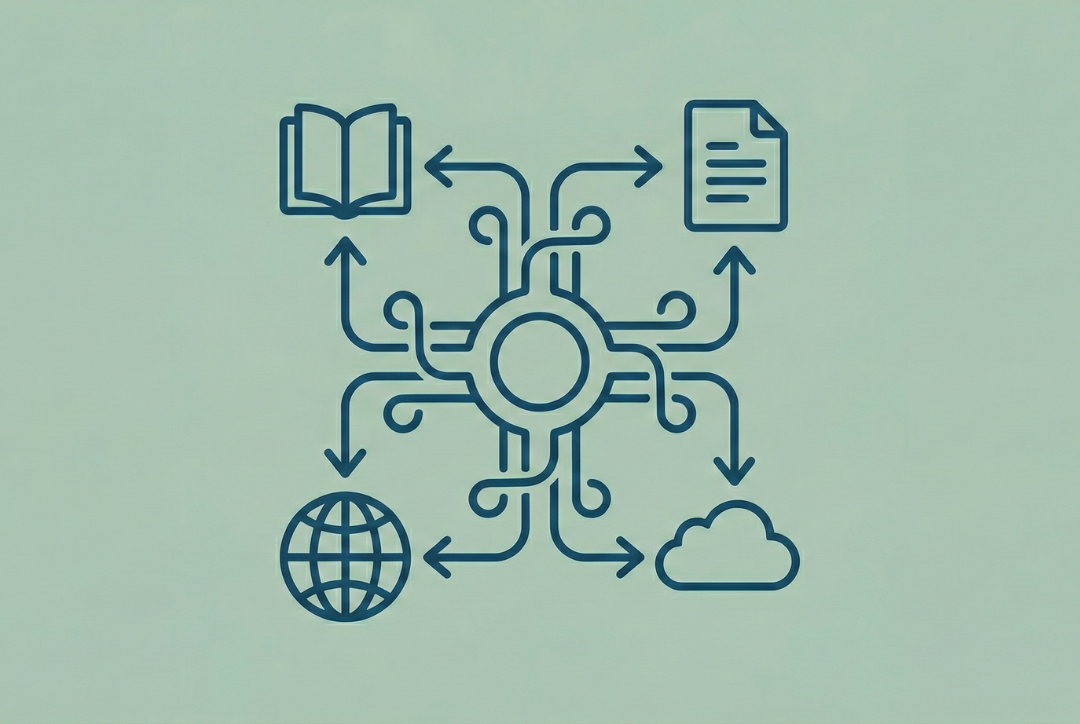
Connections
Integrating information from diverse sources, making interdisciplinary links, and seeking insights to reveal innovative solutions. With AI, this translates to building deep workflows, learning across tools and platforms, and bridging theory with industry practice.
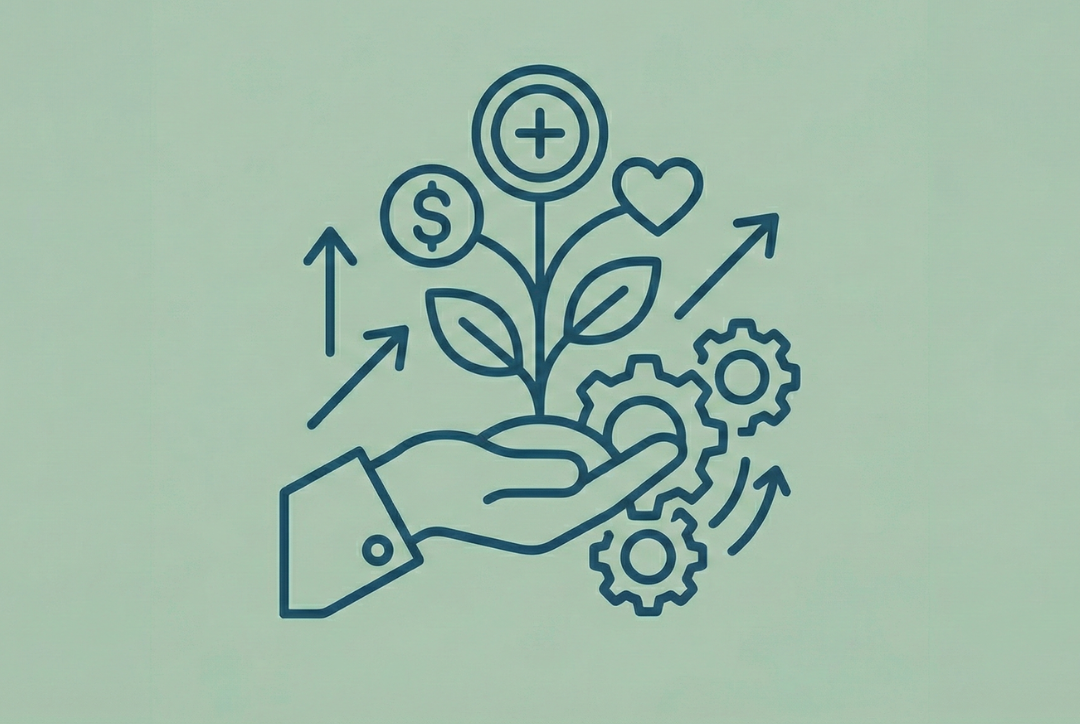
Creating Value
Acting on opportunities to produce meaningful benefits for others, continuously learning from both success and failure. Through AI, we focus on redesigning for student success, improving research impact, and enhancing educational effectiveness.
AI as an Entrepreneurial Enabler
The "AI economy" is bringing with it changes that are impacting early career knowledge workers the most, and young graduates and students have reason to be worried. On the bright side, the advent of AI promises to significantly lower the barriers to starting a business and accelerate the necessary learning curve.
An entrepreneur who once might have spent years learning how to run a business now has access to on-demand intelligence. AI systems can perform market research, analyze financial reports, help develop pricing models, draft marketing campaigns, and even help strategize to build a professional services firm.
As a KEEN partner, we adopt a definition of the entrepreneurial mindset as a set of attitudes, habits, and behaviors conducive to problem-solving, innovation, and value creation, especially in engineering contexts.

Skills most critical for staying ahead of the AI curve include curiosity, imagination, critical thinking, the ability to work well with AI, and intrinsic motivation. These are essentially the ingredients of an entrepreneurial mindset, augmented with AI literacy.
While an entrepreneurial mindset is essential for success in a rapidly changing world, AI literacy provides the fundamental skills necessary to leverage these tools for entrepreneurial success. Entrepreneurship and AI fluency are in synergistic interaction in today’s world.
Why start an AI Academy
Artificial intelligence is reshaping engineering practice, education, and career paths at an unprecedented pace. Rather than allowing this transformation to just happen to us—or letting technology companies dictate our educational future—GW Engineering is taking a leadership position.
The AI Academy represents our commitment to building comprehensive AI capabilities from within our academic community. AI literacy is much more than learning to use tools: we need new ways of thinking, working, and creating value. Our approach empowers faculty to become AI orchestrators who can integrate multiple capabilities into coherent workflows, amplifying both their productivity and creativity.
Through structured learning, hands-on experimentation, and collaborative innovation, we are fostering a culture where faculty lead the transformation. The result: engineering education that prepares students not just to use AI, but to shape how AI serves humanity.
The AI Academy aims to shift the mindset from fear and misunderstanding to confidence, fluency, and excitement about the future we're building together.
88%
of executives and IT professionals believe AI projects are blocked by a lack of AI skills among their colleagues.
(PluralSight 2025 AI Skills Report)
7x
of growth in demand for AI fluency in U.S. job postings in two years; it is now the fastest‑growing skill requirement.
(McKinsey Global Institute November 2025 Report)
65%
of organizations had to abandon AI projects due to a lack of AI skills among staff.
(PluralSight 2025 AI Skills Report)
Inside the AI Academy: Structure and Commitment
The AI Academy is a six-month structured learning program designed specifically for GW Engineering faculty. Our first cohort of 15 faculty members represents all SEAS departments, creating a cross-disciplinary community of practice. Rather than passive training, the Academy is an active laboratory where faculty develop AI capabilities while redesigning their own teaching and research workflows.
Our First Cohort
Starting November 2025, we have:
- 15 faculty members across all SEAS departments
- Representing diverse engineering disciplines and teaching approaches
- Committed to experimentation and knowledge sharing
- Creating a cross-departmental community of practice
Future Vision: The Academy operates in cohorts, with each group positioned to mentor the next generation of AI-fluent faculty, creating sustainable transformation across the school.
Our Commitment
Participants engage in a balanced blend of structured learning and independent experimentation:
- Regular meetings (90 min, online): Structured learning sessions with demonstrations, hands-on practice, and collaborative problem-solving
- Sprint (half-day, in-person): Intensive workshop focused on specific applications—from "red-teaming" assignments to building custom AI tools
- Independent experimentation: Applying AI workflows to real course materials, research projects, and administrative tasks
Our Curriculum
- Foundational Competencies:
Moving from individual tools to integrated AI workflows and systems thinking - Prompt Engineering: From "asking questions" to "engineering instructions" with precision and purpose
- AI in Research: Accelerating research productivity while maintaining academic rigor
- Assessment Redesign: Creating meaningful evaluation in the age of AI-capable students
- Building AI Tools: Developing course-specific AI assistants and persistent knowledge systems
- Ethics and Leadership: Leading responsible AI adoption and shaping institutional policy
Content Gallery and News

Session 3 Recap: AI for Literature Review and Research Discovery
February 28, 2026
AI-enhanced literature review: semantic discovery tools, deep research agents, and NotebookLM workflows.

Session 2 Recap: Persistent Knowledge and Context Management
January 24, 2026
Working with AI requires thinking in context. This means considering the full state available to an AI agent at a given time.

Session 1 Recap: From Tools to Systems
January 5, 2026
For the inaugural session with our first faculty cohort, we moved past the "shiny object syndrome" of individual apps and focused on AI workflows.