

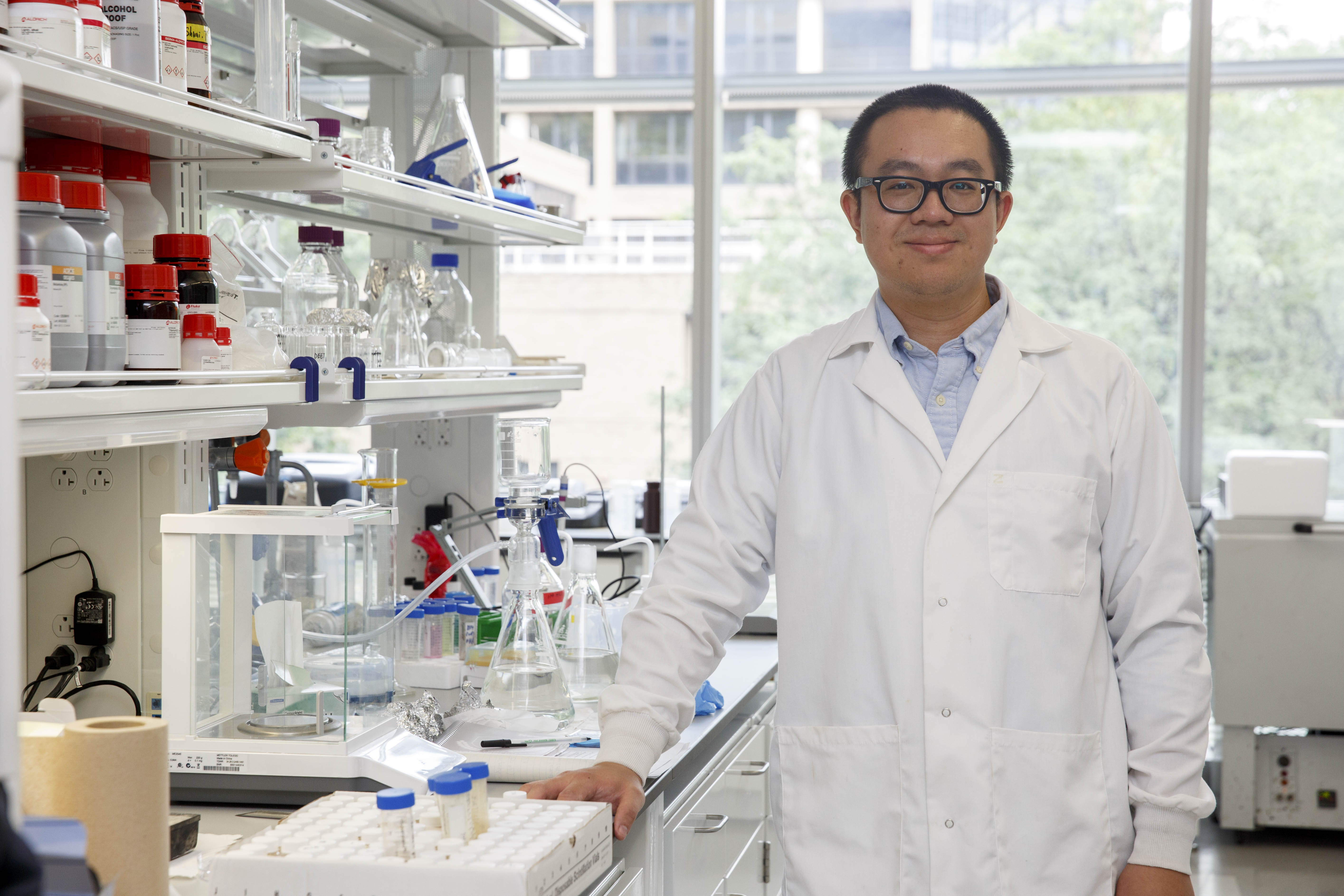
Viral diseases spread through air, water, food, and contaminated surfaces, posing significant public health risks. As a leading environmental engineer, Professor Danmeng Shuai works at the forefront of safeguarding public health against such viral transmission pathways
Shuai was honored by the Washington Academy of Sciences on May 7 for his outstanding research contributions in environmental engineering, receiving its Excellence in Research Award and being selected as an Academy Fellow. “This is a recognition of what I have done, and it encourages me to do interesting work in the future to protect public health through engineering interventions,” he stated.
Integrating environmental engineering, microbiology, and nanotechnology, Shuai translates fundamental virus behavior into practical technologies. During COVID-19, his group was the first to test the air filtration performance of his pioneering electrospun nanofiber face masks using real coronavirus aerosols. In collaboration with Professor Yun Shen, they further enhanced the fibers by incorporating the photoreactive dye rose Bengal to simultaneously capture and neutralize up to 99.9% of infectious aerosols.
Beyond air filtration, Shuai’s research addresses emerging waterborne threats. His group was the first to evaluate the environmental behavior of vesicle-cloaked virus clusters, also known as viral vesicles, and found that these viruses exhibit remarkable resistance to common disinfection strategies, including ultraviolet light irradiation, solar disinfection, and peroxide- and chlorine-based disinfectants.
Together, Shuai’s innovations in air filtration and viral vesicle research have set new standards for protective technology. For instance, his viral vesicle discoveries will continue to guide the development of robust treatment strategies and inform regulatory frameworks as communities increasingly look to potable water reuse to address water scarcity.
As a new member of the Academy, Shuai will have the opportunity to interact with researchers across a panoply of scientific disciplines and to continue engaging with the public through contributed articles, such as his 2025 piece in The Source.
“I will be more engaged in activities hosted by the society, especially helping K-12 students and the general public to increase their understanding and engagement in STEM, particularly in environmental engineering,” said Shuai.