

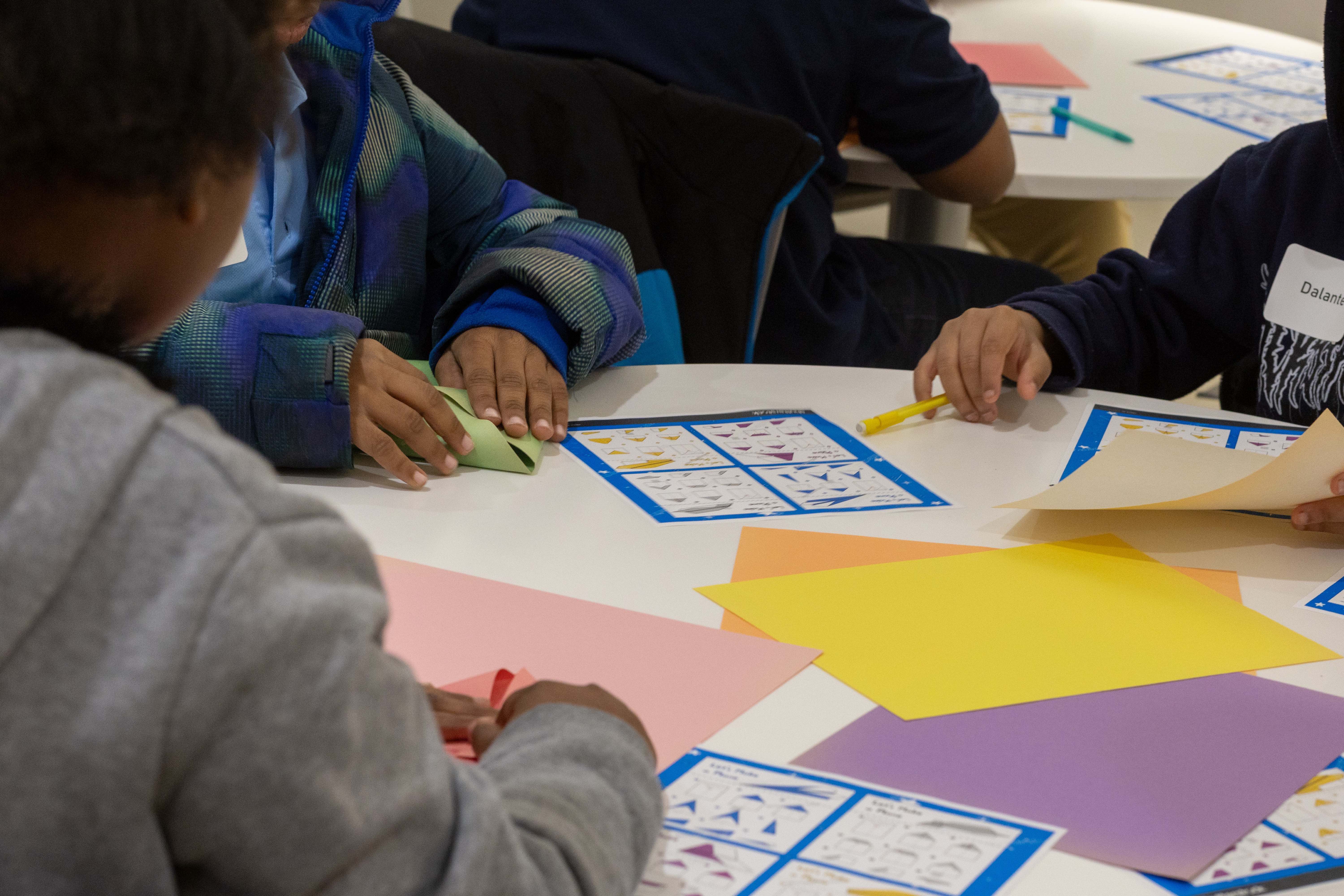
On March 6, paper airplanes soared across the B1 level of GW’s Science and Engineering Hall while fragile marshmallow towers were built with spaghetti noodles. These activities were part of an exciting visit from 46 students from Kimball Elementary, a STEAM-focused Title I D.C. Public School, during which they dove into science, technology, engineering, and math (STEM) through these hands-on experiences.
The visit was part of the global law firm Hogan Lovells’ annual trip with Kimball to universities across the district to introduce their students to college and educational paths in STEM. For the second consecutive year, GW alum Kiana Lee collaborated with SEAS Together, the Engineers’ Philanthropic Society (EPS), and the Office of Inclusive Excellence to host the event at GW Engineering.
GW Engineering students and staff led the activities to illustrate key STEM concepts, such as structural stability and aerodynamics. For Tobi Momodu, a second-year biomedical engineering major and EPS vice-president, witnessing fellow members help these budding engineers learn and progress was an unforgettable experience.
“I remember one of the kids was struggling to fly their paper airplane very far, and we briefly talked about drag and lift and how increasing the wing size could help,” said Momodu. “Once they made that change, the paper airplane went soaring across the room. Moments like these help the kids gain insight and relate what they learn in the classroom to practical applications.”
Momodu hopes this visit showed that science is more than just a school subject and encouraged these students to explore their natural curiosity and expand on the lessons they learned here.
“By exposing these students to STEM education early, they learn and understand that the field is not inaccessible or super hard, but rather something they have seen and done before. It opens possibilities for them later on in STEM-related fields and also builds their critical thinking and problem-solving skills,” Momodu said.