


In the heart of the world’s most influential city, sophomore scholars from across the nationally-recognized Clark Scholars Program Network (CSPN) convened at GW Engineering for the annual summit from September 25 to 27. Servant leadership, impact through engineering, and legacy beyond the classroom are key pillars of both CSPN and GW Engineering. Both were showcased throughout this engaging weekend filled with opportunities to connect, serve, and innovate.
CSPN was launched in 2023 to maintain the A. James & Alice B. Clark Foundation’s successful Clark Scholars Program through this strong network that comprises 11 of the nation’s top engineering schools. Partner institutions include Georgia Tech, Johns Hopkins University, University of Maryland, Penn State, Stevens Institute of Technology, University of Pennsylvania, University of Virginia, Vanderbilt University, Virginia Tech, Duke University, and GW Engineering.
The annual network summit is an opportunity specifically designed for sophomores to meet like-minded students, lay the foundation for the rest of their journey in the program, and develop skills and connections that will serve them throughout their lives. This year, 112 scholars and their school’s program directors attended. They were welcomed to GW with a tour of the Foggy Bottom campus and opening remarks from Courtney Clark Pastrick, Board Chair of the A. James & Alice B. Clark Foundation, and GW Provost Edward Balleisen.
“Even though we all come from different backgrounds and attend different universities, it was nice seeing how much we could relate to one another, especially when it came to our goals and the opportunities we’re working towards,” said Jason Azumah, a sophomore at GW Engineering majoring in electrical engineering.

Dr. Royce Francis, faculty director of GW Engineering’s Clark Scholars Program, said the GW team jumped at the opportunity to serve as a first-time host this year. It was a way to not only contribute to the network but also show off GW’s location and give other students a chance to experience the unique opportunities it provides. For instance, the second day began with a trip to the National Air & Space Museum, which was recently revitalized by Clark Construction.
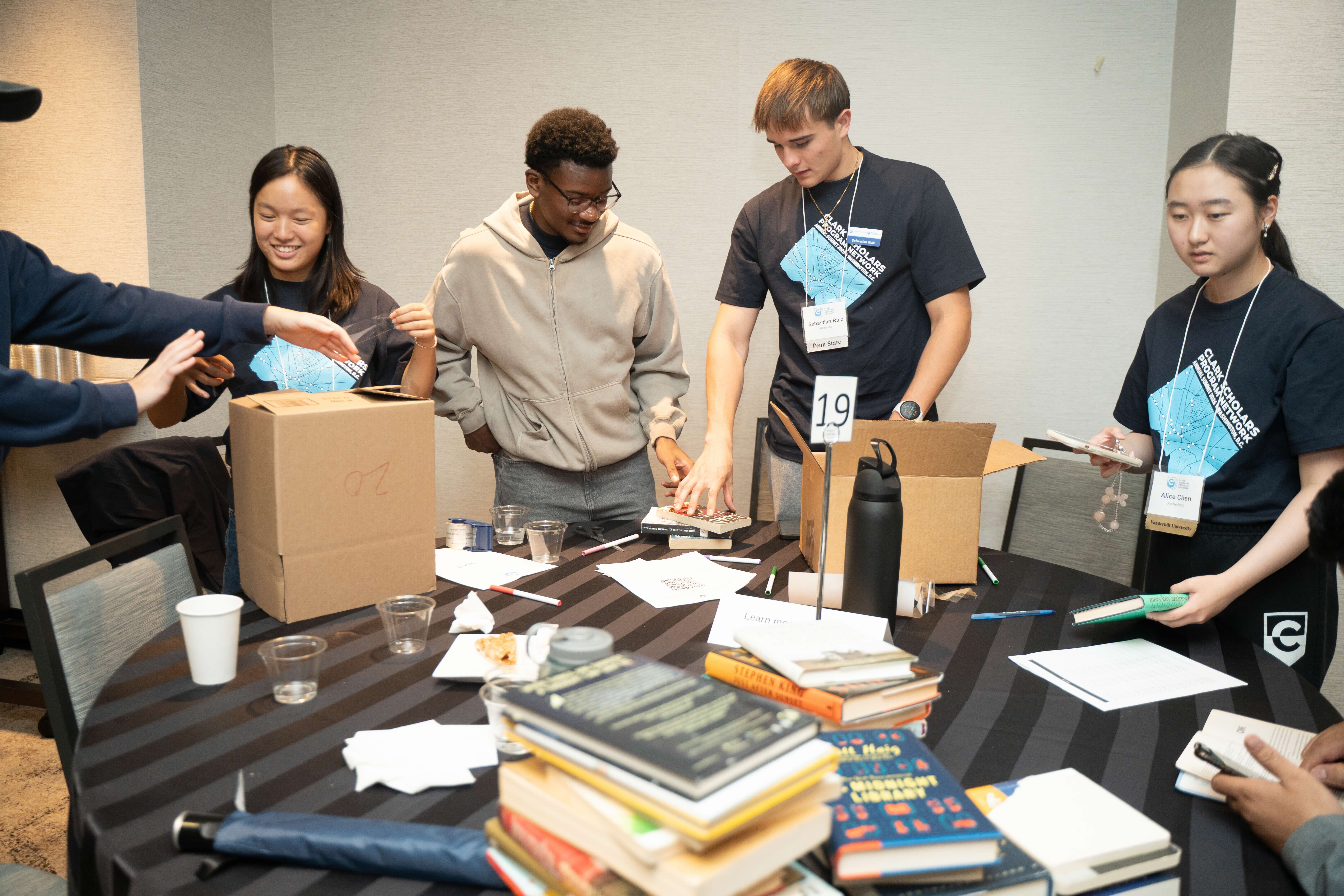
The day continued with a transition to service-oriented activities, as scholars spent the afternoon cataloging and packing gently used books that will be sent to Jamaica to replenish educational resources in communities affected by last year’s Category 5 hurricane, Hurricane Melissa. Afterward, they returned to GW’s Science & Engineering Hall to participate in the GW Program Showcase.
While a similar design challenge is coordinated each year, GW’s showcase took a distinctive approach by sourcing ideas from Garfield Elementary School and the Social Justice School for products or services that they believe would improve their communities. These K-12 students asked for technological innovations ranging from robots that can do their chores or help people learn languages to autonomous ovens and cars that can refuel themselves.
“GW wanted an informal, interactive, and community-based activity, which already takes you out of that competitive state of mind,” said Francis.


With just 50 minutes to brainstorm and create, teams of scholars from various schools and disciplines developed innovative prototypes in response to these prompts using craft materials and cardboard. For instance, one team crafted a model of a robot with opposable hands and movable wheels made of bottle caps that would allow it to move around the city to clean up litter. Their creations were judged based on superlatives such as “most aligned with the vision” or “best team dynamic.”
An alumni panel on the final day underscored how Clark Scholars programming, such as the annual summit, empowers scholars to responsibly translate innovation into society and helps them build a network that will support this meaningful work. Each student left with a renewed commitment to making a difference in their communities.
“It was interesting to hear from people who were once in our position and see where the program has taken them,” said Azumah. “It gave me a lot to think about as I continue my own journey as a Clark Scholar, and I left the summit feeling glad I got to be part of it.”

